Wednesday, January 26, 2022

FINE Things 59

Short Video: What do Bluebirds eat? [link]

What is a vernal pool, what lives there and why, plus, how to build one in your backyard. A podcast. [link]
 
What causes dandruff? [link
 
Signals from sweeteners and sugars are relayed from the gut to the brain by different neural pathways. [link]
 
A new study suggests that migratory birds have lighter colors than other birds. This difference may help them stay cool on their long journeys, when they are pushing themselves to their physiological limits.  [link]
 
A plant fools bees with 'fake' female pollen. [link]

There is a war of words in the scientific world about whether plants are listening, or even talking back. [link]
 
Why would a moth lay eggs on a plant that is already being consumed by caterpillars? Shouldn't she seek out a plant with fewer competitors?  [link]

Anatomy and history collide in glass sculptures. [link]
 
Handmade blown glass flora and fauna. [link]

Beavers offer lessons about managing water in a changing climate, whether the challenge is drought or floods. [link]
 
Dinosaur food and Hiroshima bomb survivors: maidenhair trees are 'living fossils'  [link]

Lighted nets dramatically reduce bycatch of sharks and other wildlife while making fishing more efficient [link]
 
"Nothing but fish nests": Massive icefish colony found in Antarctica [link]

Vulture bees discovered in Panama and Costa Rica. [link]


Wednesday, January 19, 2022

FINE Things 58

How does the Leopard get its spots? [link]

DEEP LOOK takes a closeup view of how slime molds move. [link]

George Washington Carver, a plant scientist's perspective. [link]

What everyone should know about flowers and bees. [link]

A recent paper challenges a long standing assumption about mutations: they occur independently of their effect on fitness. The new research, summarized here, suggests that important genomic regions mutate less often than do other regions. [link] (Note: the article may be pretty technical.)

Climate change threatens coffee as we know it, but there is a delicious wild species that could help save your morning brew. [link]
 
Newly discovered patterns in evolution may help scientists make accurate short-term predictions. [link]

Studies that map the adaptive value of viral mutations hint at how the COVID-19 pandemic might progress next. [link]

Can we really be friends with an octopus? When octopuses are social, are they reaching out or simply reacting?
[link]
 
Read this account in the New Yorker of crisscrossing Siberia in the age of climate change
[link]

As climate changes, so does life in the planet’s soils. To understand what might be lost, a microbial ecologist taps molecular methods to explore Earth’s underground microbes, from the permafrost to the grasslands. [link]

Here is a video of Doug Tallamy presenting the ideas in his book, Bringing Nature Home: The Importance of Native Plants [link]

Nature Rambler Heather Larkin made a video of tips for macro photography last year, just as the pandemic was starting. "With the newest wave, more people are at home again and macro photography is a great way to enjoy the natural world around us," she says. [link

Why are January days so cold? The day length has been increasing since before Christmas and its still cold. The Conversation sums up what you were taught in school, but forgot.  [link]


Wednesday, January 12, 2022

FINE Things 57

This week offers 13 different FINE experiences for your enlightenment and enjoyment.

Deep Look: Australian walking stick insect [link]
 
Here is an exciting and interesting podcast about flowers that explode. The podcast interview lasts about 50 minutes. There's even a movie! Well worth your time. [link]
 
When landscapes are abandoned, do butterflies flee? Agricultural intensification affects butterfly populations, but so does the abandonment of farmland. [link]

Resilience of crops confirms that drought alone did not cause a 'collapse' in Mayan civilization. In the 800s, Mayan cities in southeastern Mexico and Central America were abandoned - just as drought hit the region. But a botanical study shows that the connection between drought and depopulation was not simple. [link]

From Linda George: The gift shop in the Visitor Center at the Garden has a display case with fanciful creatures made from acorns and other natural materials. This link is a short movie featuring interactions between acorn fairies and actual birds. It's fun! [link]

Two recommendations from Linda Chafin: 
Saving old-growth trees (WAPO) [link]
Fires swept through a nature preserve with a managed forest and an adjacent, unmanaged forest in Oregon. Compare the side-by-side results. [link]

Life in a Wingstem stem. Take a look at all the critters that can inhabit the stem of a common fall-flowering plant. [link]

Chalk is made of the remains of unicellular, planktonic organisms in the oceans of the world. For shelter, each individual cell builds a protective house from 'bricks' it makes itself. And what beautiful bricks they are! This short piece tells you about these creatures and their importance in storing CO2. [link]
 
And peaking of chalk, a recent article in Nature suggests that variations in Earth's orbit can affect the abundance of coccolithophores enough for them to actually cause alterations in the cycles of glaciation. [link]

Acorn weevil 'snouts' inspire strong materials that are simultaneously flexible. [link]

What's in a name? Kathy Keeler, at A Wandering Botanist, ruminates over what we should call the Poinsettia. [link]
 
In 1629, the Batavia, a ship of the Dutch East India Company, met disaster off the coast of Australia. A new analysis of the shipwreck's tree rings uncovers how such vessels were built and where the wood that built them came from. [link]


Thursday, January 6, 2022

FINE Things 56

 Why these Mexican fish do the wave. [link]

Wasps in your yard. Getting to know them. [link]

Can single cells learn? [link]
 
Hydra with a bud
Peter Schuchert, CC BY-SA 4.0
<https://creativecommons.org/licenses/by-sa/4.0>,
via Wikimedia Commons
Sleep evolved before the brain. Ask the Hydra. [link]

 
How the swine flu epidemic of 2009 developed. [link]
 
Do birds have a sense of smell? Turkey Vultures can smell carrion, but what about other kinds of birds? [link]

Ted LaMontagne thought this WAPO article was worth reading. [link]

Monarch butterflies may have another trick up their sleeves to avoid being preyed upon. [link]

Sunday, December 26, 2021

FINE Things 55

I wish you all a Happy New Year and hope we all can get out from under the thumb of the covid virus. Paraphrasing Spock: "Be well and prosper!"
 
Gary and Ted both recommend this article on tornado weather in a warming climate. [link]

From National Geographic: The 12 most intriguing animal discoveries of 2021; From ants that can regrow their brains to the world's tiniest reptile. [link]

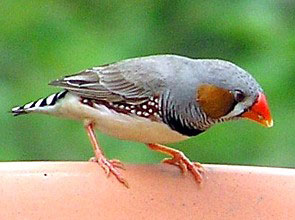
Zebra Finch
The original uploader was Nv8200p at English Wikipedia.
Attribution, via Wikimedia Commons
Gary Crider says this article is fascinating! While still in the egg, Zebra Finch chicks  alter the way their mitochondria work in response to their parents calls.  [link]

David Miller recommends this broader perspective on Covid from Nicolas Christakis, Prof of Social and Natural Sciences at Yale. [link]

This piece, from Nature, tells, in detail, the story of how mRNA vaccines were developed. (The covid vaccines are mRNA based).  [link]
 
The winter solstice is noticed by honey bees. Learn more at honeybeesuite.com: [link]

Can animals understand magic tricks? The New Scientist has an article about European Jays that can be fooled and what that tells us about their mental processes. [link]
 
Ted LaMontagne liked this article about a fossilized dinosaur embryo still in the egg shell. (From the Washington Post): [link]

This article in the New Scientist discusses the problems in understanding how the ancestors of New World Monkeys could have traveled from Africa to the New World.  [link]
 
A history of European mistletoes. [link]

Saturday, December 18, 2021

FINE Things 54

 Posted Dec. 18, 2021; Poinsettia link added Dec. 20,

About Poinsettia, [link]
 
Science writer Ed Yong explains why he cancelled his 40th birthday party. [link]

Emily wanted to share this story about 80,000 bees in a shower wall. [link]

At long last a millipede
that lives up to its name is discovered. [link]

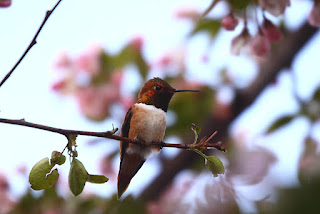
Rufus Hummingbird
Photo by Kameron Perensovich,
CC BY-SA 2.0 <https://creativecommons.org/licenses/by-sa/2.0>,
via Wikimedia Commons

Gary Crider recommended this article about winter hummingbird sightings. [link]

Rosemary Woodel recommended this article about tech that permits researchers to track the movements of animals as small as wasps. [link]

Tick removal (Australian study) after killing in place: [link]
Taylor, B.W.P., Ratchford, A., van Nunen, S., and Burns, B. (2019). Tick killing in situ before removal to prevent allergic and anaphylactic reactions in humans: a cross-sectional study. Asia Pac Allergy 9, e15.

Rosemary also recommends this article on tick-transmitted disease: [link]

Just in time for the holidays: 12 Things to know about mistletoe: [link]

And don't overlook this
podcast by the Nature Guys [link]

Other kinds of "farmers." [link]

From Small Things Considered: how organism tell which way is up and which way is down. [link]

A New Yorker review of books about fungi. [link]

Making photosynthesis more efficient, a New Yorker piece by Elizabeth Kolbert. [link]
 
Have a happy, safe holiday!
Dale

Sunday, December 12, 2021

FINE Things 53

Here are the links to articles and videos for this week's FINE Things. Let me know which ones you enjoyed the most and I'll try to find similar types next week.
 
Sea Otter preening
Photo by "Mike" Michael L. Baird,
CC BY 2.0 <https://creativecommons.org/licenses/by/2.0>,
via Wikimedia Commons
How Sea Otters keep warm in the frigid Pacific waters: [link]

From Science magazine: German forests have been devastated by drought and fires. What lessons can be learned from their experience? [link]

From The Scientist Daily: Ancient and modern human genomes reveal that a variant of the human growth hormone receptor likely helped our ancestors survive when food was scarce.
[link]

From Knowable Magazine: Around the world, marine creatures from the smallest to the largest rise from the depths after dark to eat and reproduce. When the great vertical migration reverses before daybreak, the organisms bring carbon from the upper ocean into the deep sea, and scientists are working to disentangle what motivates these important movements.
[link] 

From the New Humanitarian: Bangladesh's annual monsoon rainfalls submerge lowland areas for months on end. But in the rural southern district of Pirojpur the crops rise with the floodwaters.
[link]

Your metabolism and what it means.
[link]

Is ethanol production worth it?
[link]

The genes vampires lost.
[link] 
 
Why the ocean needs salt.
[link]

David Miller recommended a video on Plate Tectonics:
[link]

From Quanta magazine: Wildfires can have mixed effects on ecosystems. [link]

From Knowable Magazine: Why there's no such thing as pristine nature.
[link]
 
Until next week,
Dale